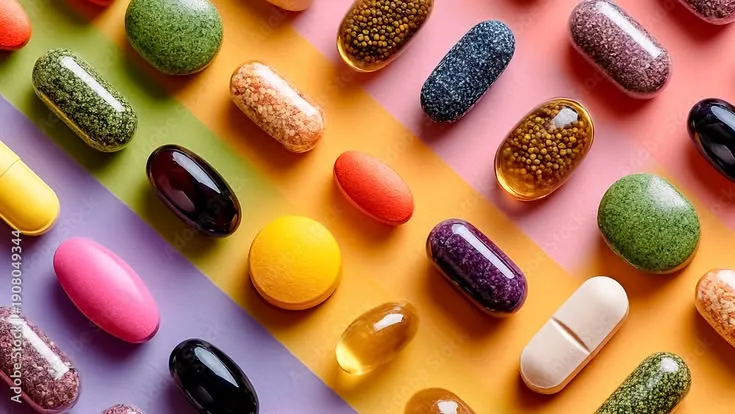
Choosing a natural food colorant for a nutraceutical product starts with the delivery format, not with a shade card. Capsules and coated products place color in a very different environment from beverages or bakery mixes. FoodRGB lists nutraceuticals among its application areas and specifically mentions capsules and coated products. Developers therefore need to consider how the color will be dispersed, how opaque the base is, what processing steps follow, and how the finished product will be stored before deciding whether a particular color system is suitable.
Capsules Can Change How a Shade Looks
Capsule shells can make a pigment appear lighter, deeper, or less transparent than it did in a simple laboratory sample. The surrounding material, wall thickness, and background of the filled capsule all affect what the eye sees. This makes direct testing important. A development team can compare several concentrations in the actual shell system instead of choosing a color from water alone. The aim is not simply to create the darkest shade, but to find a consistent appearance that suits the product and remains practical to reproduce.
Coated Products Need Separate Trials
A coating creates another formulation environment because the color has to spread evenly across a surface rather than through the whole product. Thickness, drying cases and coating piece can influence the final tone. If the pigment itself is not of the right properties, uneven application might lead to pale areas or darker borders. Small trials should copy the intended coating process as closely as possible. This lets the team judge coverage, shade, and handling together before moving to larger equipment where inconsistencies can become more difficult to correct later.
Format Affects Handling
Natural colors are available in different physical forms, and the best format depends on the process. Powders are useful for dry weighing and regulated dosing; liquids are applicable for systems where color is introduced in a wet phase. FoodRGB also offers custom formulations for application-specific needs. Working with FoodRGB can therefore involve more than selecting a hue; developers can discuss pH, processing, stability, and the finished product. Choosing the format early helps production teams avoid unnecessary changes when a nutraceutical formula reaches pilot scale later.
Processing Conditions Still Matter
Color should be checked after the product has gone through its normal manufacturing steps. Drying, warming, mixing, holding time, and exposure to light can influence appearance, depending on the pigment and formulation. A fresh sample may look correct before processing and slightly different afterward. The useful test is to reproduce the planned sequence, then inspect the capsule or coated product once it has cooled and settled. This gives the development team a more realistic picture of performance than relying only on technical specifications or an untreated sample.
Consistency Becomes More Important at Scale
A small bench batch gives developers close control over every addition, but commercial production introduces larger volumes, longer mixing times and more variation between runs. Color distribution can become less even when the process changes scale. Pilot batches should therefore include checks from different points in production rather than one sample taken at the end. If shade variation appears, the solution may involve mixing time, addition order, or concentration. Solving those details during scale-up helps quality and production teams repeat the approved appearance more reliably later.
Storage Should Be Part of Approval
Nutraceutical products may remain in bottles, blister packs, jars, or other packaging for extended periods, so appearance should be reviewed beyond the day of manufacture. Light, oxygen, temperature, and packaging can influence how a natural color looks over time. Developers should keep samples in the intended pack and check them at planned intervals. This is useful even when a pigment has good stability data because the finished formulation creates its own environment. Shelf testing gives the team evidence that a fresh sample cannot provide on its own.
Conclusion
Natural color development for capsules and coated nutraceutical products works best when appearance is treated as part of the full manufacturing process. Format, dispersion, coating behavior, processing, scale, packaging, and storage all influence the final result. Manufacturers can use foodrgb.com to review natural color systems and application support for nutraceutical products. The strongest choice is not simply the shade that looks best in an early sample, but the one that can be reproduced consistently through real production and remains visually suitable throughout the product’s expected shelf life.
.png "All Natural Food Coloring And Annatto Color Innovation")